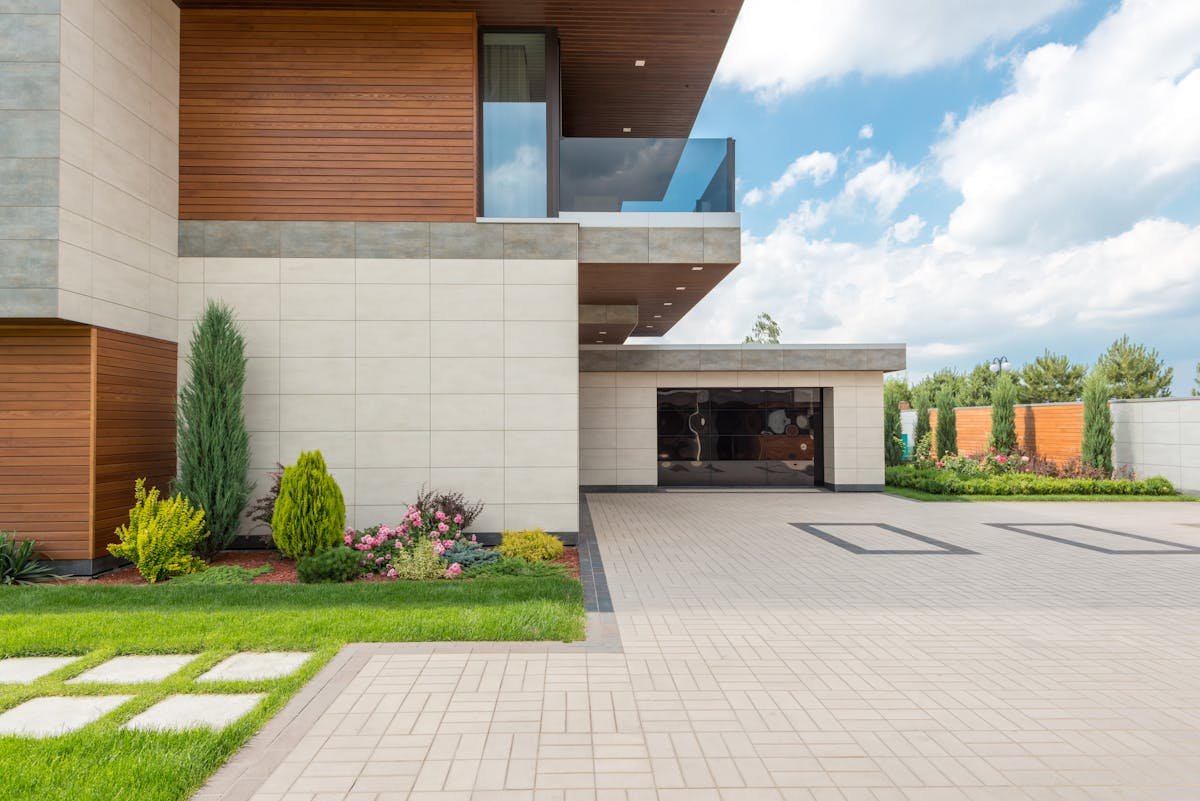
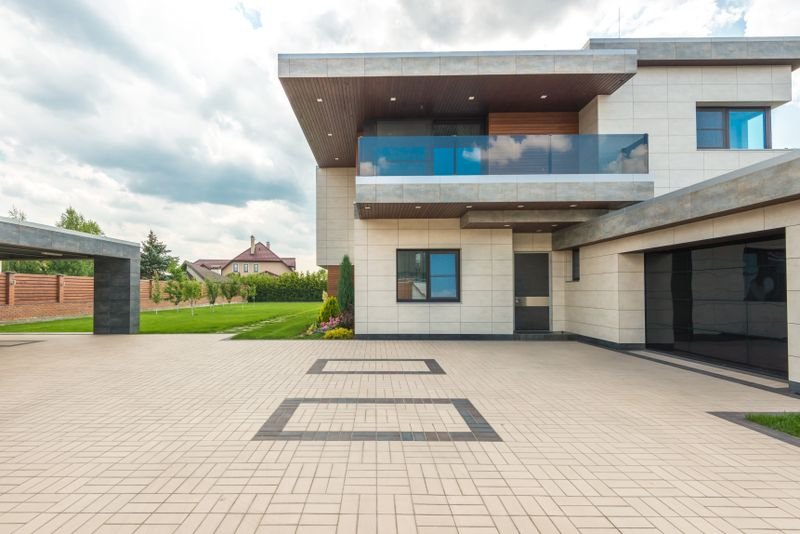
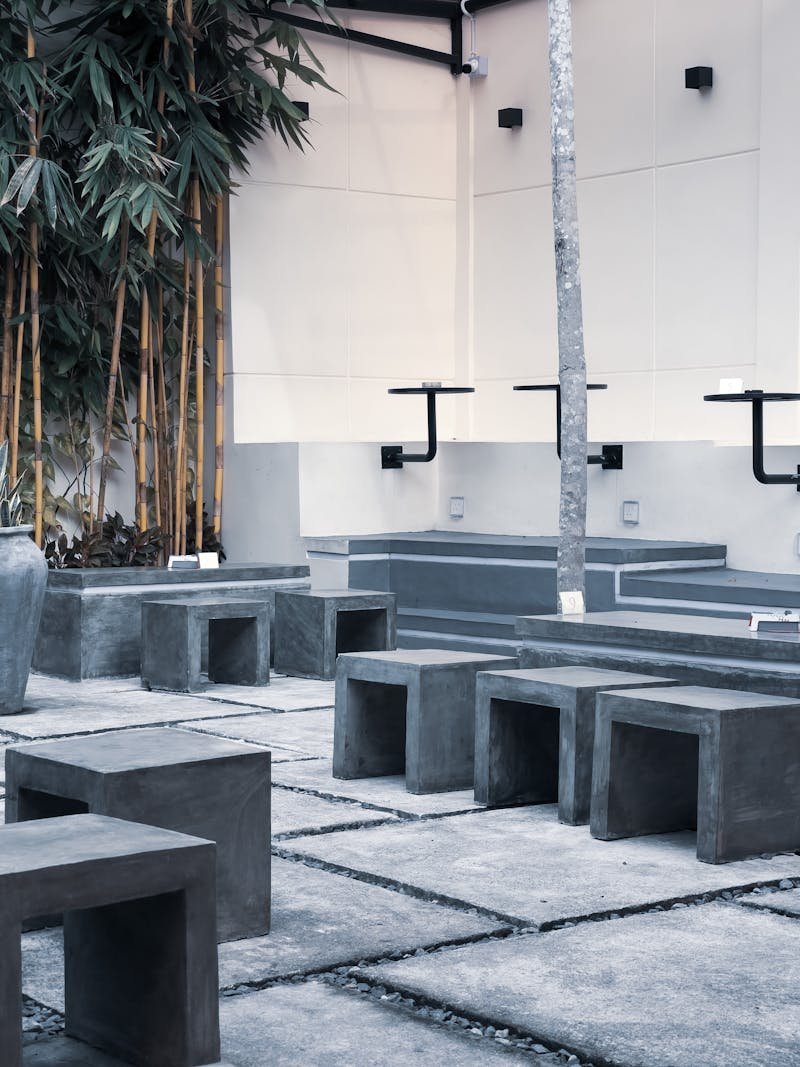
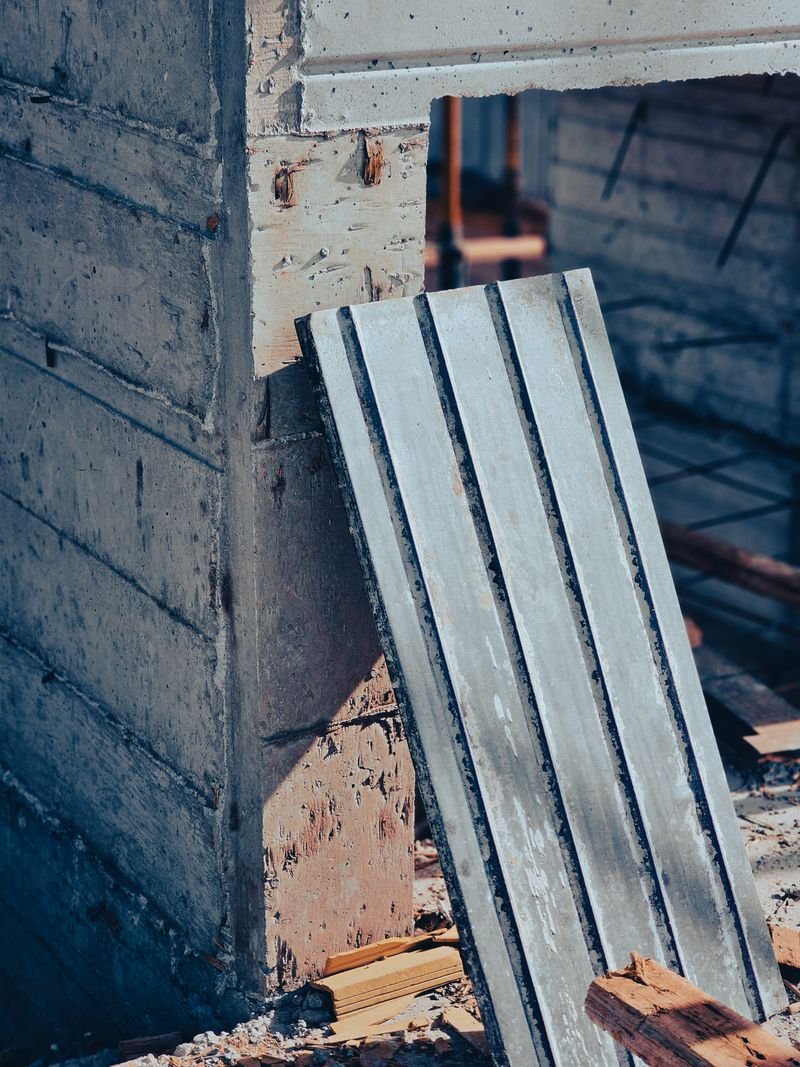
A driveway is a load-bearing slab — treat it like one
A residential driveway carries thousands of pounds of car, truck, and occasional delivery weight every day, then sits in 100-degree Texas sun, then takes a hailstorm, then a Gulf Coast downpour. The fact that homeowners think of driveways as "just concrete" is exactly why so many fail in five to seven years. A driveway that lasts 30 to 40 years is a deliberately engineered slab: correct thickness, correct mix strength, correct reinforcement, correct joint spacing, and correct base prep. There are no shortcuts on any of the five.
Thickness: 4 inches minimum, 6 inches for heavier vehicles
A standard residential driveway in Houston is 4 inches thick over a 4 to 6 inch compacted base. If you regularly park trucks heavier than 8,000 pounds (full-size trucks loaded, RVs, boat trailers, work vehicles), step up to 6 inches. The extra two inches of concrete is the cheapest insurance against future cracking under heavy loads.
Base prep is invisible — and decides 80 percent of the outcome
Underneath every great driveway is a properly graded, properly compacted base. We excavate the native clay soil, grade for drainage (sloping away from the house at a minimum 1 percent), place 4 to 6 inches of crushed limestone, and compact it with a plate or roller. A driveway poured directly on uncompacted clay will heave with the seasons and crack in two years. This is the single most-cut corner in cheap bids.
Reinforcement: rebar grid, not wire mesh
For a residential driveway we install a rebar grid: #3 or #4 rebar at 18 to 24 inch centers in both directions, tied at intersections, sitting on rebar chairs at mid-slab. Cheaper crews use wire mesh laid on the ground, then "pull it up" with a hook during the pour — the result is mesh sitting at the bottom of the slab where it does almost nothing for crack control. We use rebar properly chair-supported, every job.
The mix: 4,000 PSI is the standard
Driveways are typically poured with a 4,000 PSI mix, 4 to 6 percent air entrainment for freeze-thaw resilience (yes, Houston freezes occasionally), and either fiber mesh additive or rebar reinforcement (we recommend both for severe-use driveways). The slump should be between 4 and 5 inches — wetter than that weakens the concrete, drier than that makes finishing difficult.
Control joints and expansion joints
Concrete will crack. Physics. The contractor's job is to control where it cracks. We saw-cut or tool control joints at 10 to 12 foot spacing for a 4-inch slab (roughly 2.5 to 3 times the slab thickness in feet). Expansion joints (compressible material) are placed where the driveway meets the house, the garage slab, the sidewalk, and the street apron. Skipping joints causes random cracking — the most common driveway failure in Houston.
Finish: broom, smooth, exposed aggregate, or stamped
The default residential driveway finish is a broom finish: applied with a stiff broom while the concrete is still plastic. Provides slip resistance, hides minor surface variations, and is the most economical. Other options: smooth steel-troweled (more decorative, more slippery when wet), exposed aggregate (rougher texture, decorative), or stamped (textured patterns mimicking pavers/stone — see our stamped concrete service for detail).
The apron at the street and what about permits
The portion of your driveway in the public right-of-way (between sidewalk and street) is technically city property. Replacing an existing apron in the same footprint does not require a permit inside Houston city limits. Expanding the driveway or adding a new curb cut does — we handle the permit and inspection. The fee is itemized in your estimate.
The 28-day truth about cure time
Light passenger vehicles can use the driveway after 7 to 10 days. Heavy vehicles (trucks loaded, RVs, delivery vans) should wait 28 days for the concrete to reach full design strength. During curing, we keep the slab moist for 7 days minimum to prevent surface drying — this is the difference between a smooth, durable finish and a dusty, soft surface that wears quickly.