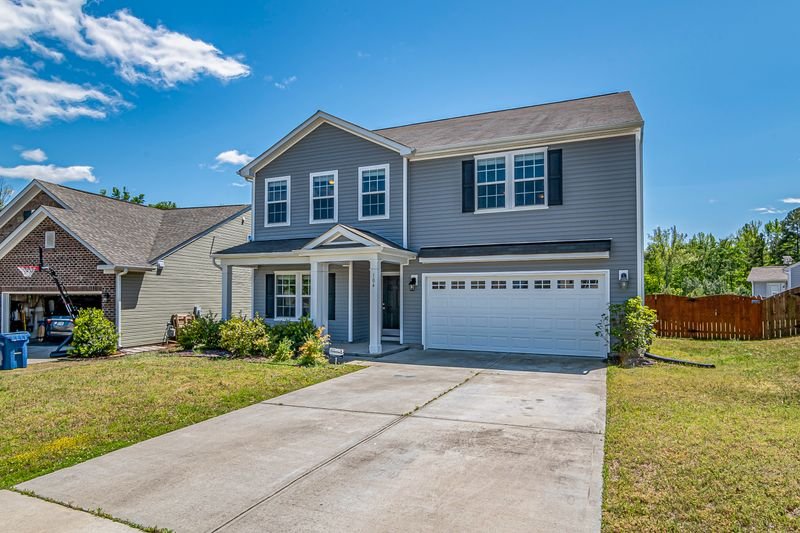
Sidewalks are simpler than driveways, but the failures are the same
A residential sidewalk is a thinner, lighter-duty slab than a driveway — but it cracks, heaves, and separates for exactly the same reasons. Skipped base prep, wrong joint spacing, missing reinforcement, and bad drainage are the four standard failures. The benefit is that a sidewalk can be installed in one to two days and costs a fraction of a driveway, so getting it right is a small investment.
Standard residential sidewalk specs
A typical front walk or side path is 4 inches thick, 3 to 4 feet wide, and reinforced with either fiber mesh additive in the concrete or a single mat of #3 rebar at 18 inch centers. For HOA-compliant sidewalks in subdivisions, the requirement is often 4 feet wide minimum to allow two people to pass — we will check your HOA spec before quoting.
Drainage and slope
A sidewalk should slope away from the house at a minimum of 1 percent (1/8 inch per foot) to prevent water from pooling and migrating toward the foundation. ADA-compliant walks have a maximum cross-slope of 2 percent and running slope under 5 percent — relevant for ramps, access paths, and commercial-adjacent residential work. We measure existing grades at the estimate to confirm what the new walk will look like.
Joints at the right spacing
For a 4-inch sidewalk, control joints should be cut at 4 to 5 foot spacing (roughly equal to the slab width or slightly more). Expansion joints go where the walk meets the house, the driveway, the porch, and the street. A common amateur mistake is omitting joints to "make the walk look cleaner" — the slab cracks itself anyway, just in random places.
Finishes and texture
Standard residential sidewalks are broom-finished for slip resistance. Decorative options include smooth troweled (for an architectural look), exposed aggregate (small stones visible on surface), and stamped concrete (textured patterns matching driveway or patio). Color is added with either integral color (mixed into the concrete) or a topical stain after cure.
Connecting to existing concrete
When the new walk meets an existing slab (porch, driveway, public sidewalk), we install an expansion joint between them — never a rigid bond. The two slabs need to move independently with temperature and moisture. Dowels (rebar pins drilled into the existing concrete) can be used where structural continuity is needed, with the joint material wrapping the dowels.
Permits and the public right-of-way
Residential walkways on private property do not require a permit in the City of Houston. Sidewalks in the public right-of-way (between the property line and the street, where the city sidewalk runs) DO require a Houston Public Works permit. If we are replacing a public sidewalk panel that adjoins your property, we pull the permit.
Curing and use
A sidewalk reaches walk-on strength in 3 to 5 days and full design strength at 28 days. We keep the slab moist for the first 5 days to prevent surface drying. Sealing is optional but recommended every 3-5 years to reduce staining from leaves, mulch runoff, and Houston tree sap.